
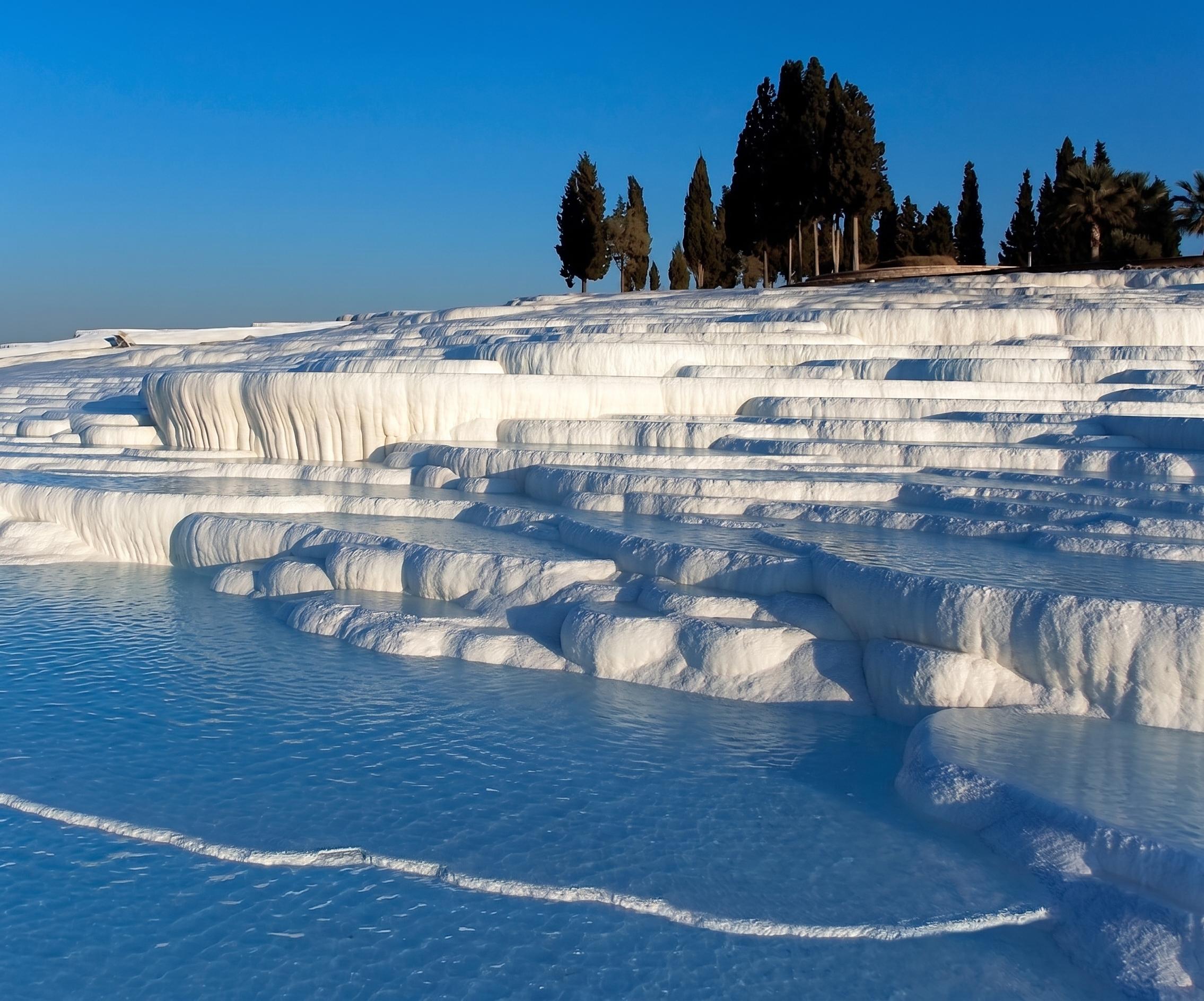
Pamukkale looks the same in every photograph and feels completely different depending on when you walk it. The terraces are a working thermal system rather than a fixed monument, and the season changes the water, the glare, and even which parts of the hillside are wet.
Here is what each part of the year is actually like.
Three things the season controls
The terraces are fed by mineral-rich thermal springs, and the flow is directed across different sections rather than left to run everywhere at once. That is deliberate. It keeps the calcium carbonate building up where it is wanted and gives worn areas time to recover. What this means for you is that some pools will be full and some will be dry chalk, and which ones changes. Nobody can promise you a particular terrace will be holding water on a particular morning.
Then there is the light. The surface is white, it is unshaded, and it reflects sun straight back up at you. On a clear day that matters more than the air temperature does. Sunglasses are not optional here in the way they are optional most places.
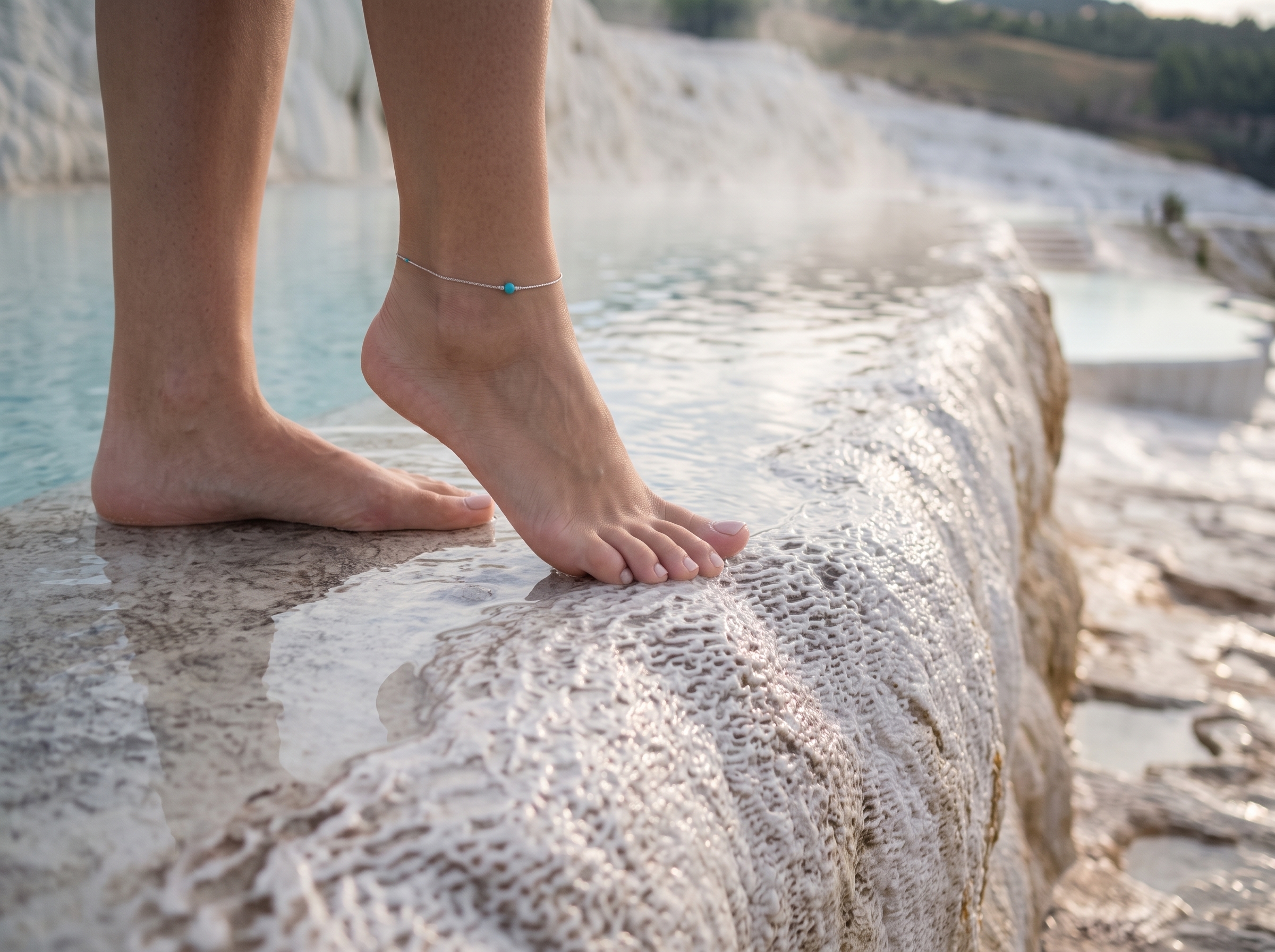
The last one is your feet. You walk the designated route barefoot, all year, to protect the formation. This is the detail that surprises visitors most, and it changes the calculation for every season. Warm stone underfoot in June is a very different experience from wet stone in January.
Spring, March to May
The strongest all-round window. The hillside is green rather than parched, the light is clear without being punishing, and daytime temperatures sit in a range where you can spend hours outside without hunting for shade.
Spring also gets you Hierapolis, the ancient city on the plateau above the terraces, in comfortable walking condition. That matters more than it sounds. The ruins are spread out and largely open to the sky, and in high summer most people give up on them.
The trade-off is that spring is not a secret. May in particular is busy.
Summer, June to August
Hot, bright and unforgiving. Inland Aegean summers are dry and the plateau offers almost no shade, so the terraces become an early-morning or late-afternoon activity rather than a midday one.
If summer is your only option, treat the heat as the planning constraint and build the day around it. Go at opening or go late, and do not try to see the ruins and the terraces back to back in the middle of the day. Warm thermal water on hot skin is also a stranger sensation than people expect, because the springs do not cool down for the season.
Autumn, September to October
The quiet favourite. Early autumn keeps most of summer's reliability with a fraction of its punishment. The light softens, the crowds thin as the school holidays end, and the walking becomes pleasant again.
By mid to late October the weather turns less predictable. Showers arrive, and evenings cool off faster than the daytime temperature suggests. This is layering season: the gap between a sunny afternoon on the white surface and a breezy evening is wider than a single jacket can cover.
If you want one recommendation from this whole article, the first half of October is very hard to beat.
Winter, November to February
The season most visitors dismiss and a small number swear by.
What you get is the terraces close to empty, snow occasionally sitting on the ridges around a hillside that is already white, and steam rising visibly off the thermal water in cold air. It photographs unlike any other time of year.
What you give up is comfort and reliability. Wet stone underfoot in cold weather is genuinely unpleasant for some people, daylight is short, and rain is common. Winter rewards travellers who came for the place rather than for the conditions.
Season by season, at a glance
| Season | Crowds | Walking comfort | The catch |
|---|---|---|---|
| Spring | Building, busy by May | Excellent | Popular; book accommodation ahead |
| Summer | Heaviest | Poor midday, fine early and late | Heat and glare drive the whole day |
| Autumn | Thinning | Excellent early, mixed later | Rain arrives from mid-October |
| Winter | Lightest | Cold underfoot, short days | Weather is unreliable |
What does not change with the season
The Ancient Pool, the thermal pool set among fallen columns that visitors have long known as Cleopatra's Pool, reopened after restoration in 2026. It is the one place on the site where you properly swim. The terraces themselves are shallow wading, ankle to knee at most. People arrive expecting to bathe in the pools on the hillside, and that is the correction worth having in advance.
Bring something to carry your shoes in. You will be holding them for a long stretch of the walk, and a bag is the difference between an easy visit and an awkward one.
Hierapolis deserves more than the twenty minutes most day-trippers give it. The theatre and the necropolis are why the site is listed alongside the terraces rather than treated as a footnote, and skipping them is the most common regret people report.
Seeing it from above
The site can also be flown over, which changes the geometry of the place entirely. From the ground the terraces read as a staircase. From the air they read as a single white spill down the hillside with the ruins sitting behind them. Flights depend on wind and are most often arranged in the calmer parts of the day, so treat it as a weather-dependent bonus rather than the anchor of your itinerary.
So, when should you go?
Come in early October if you can choose freely. Come in spring if October does not work and you want the safest conditions. Come in summer only with an early start and a plan for the heat. Come in winter if you would rather have the place quiet than have it comfortable.