
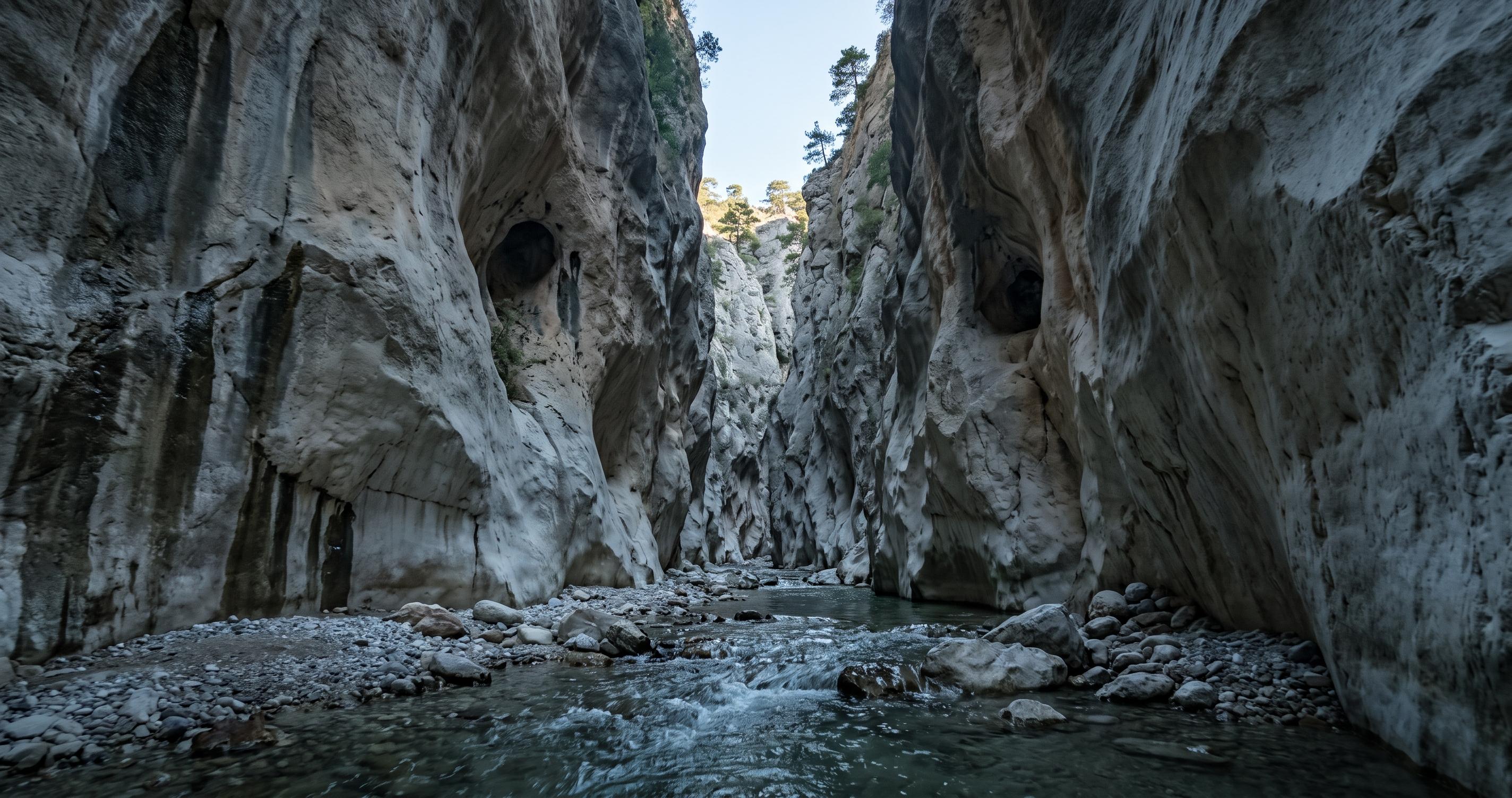
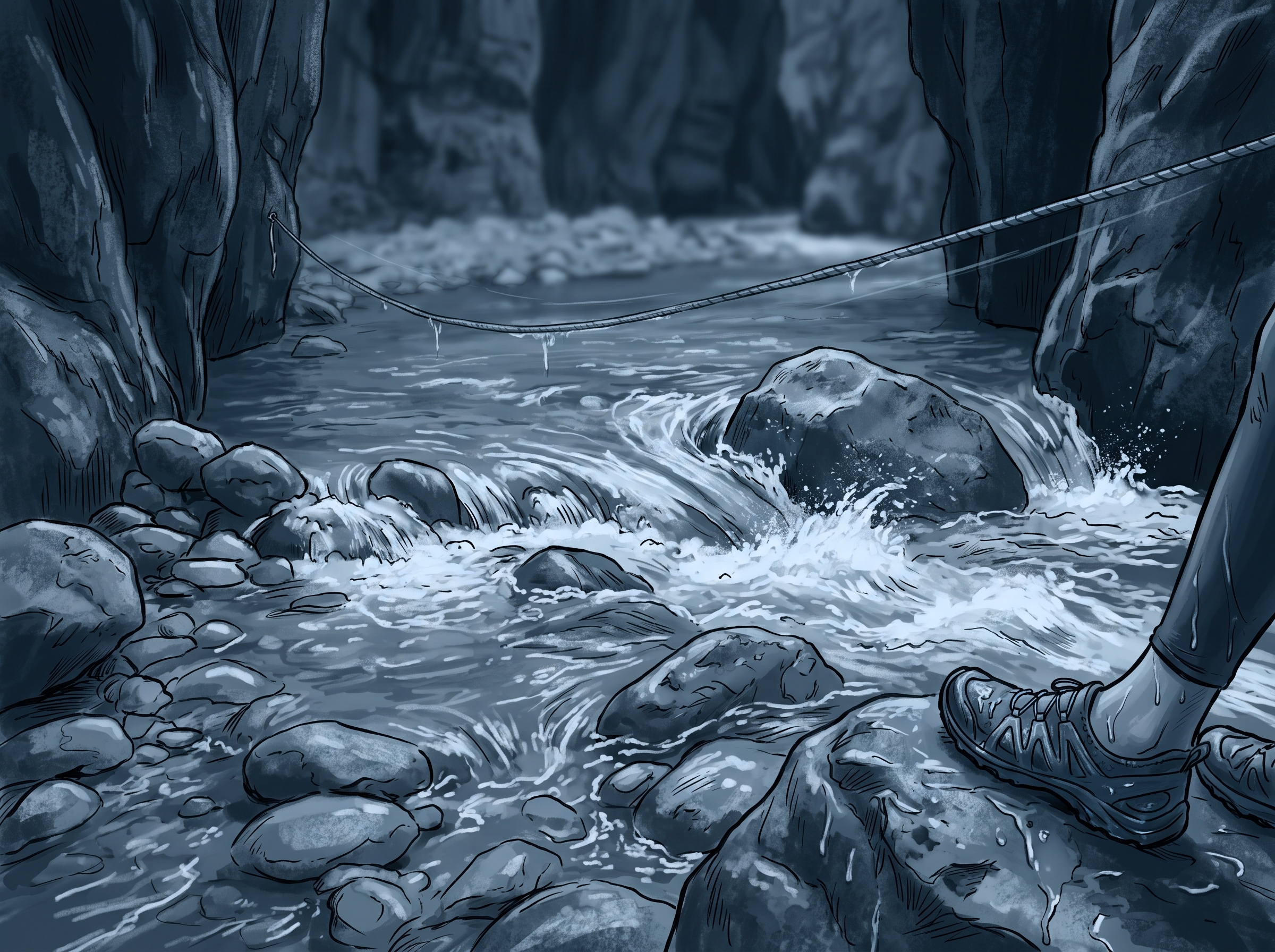
The first thing that happens at Saklıkent is that you get wet, and the water is colder than you expected. The way into the gorge crosses the river almost immediately, and what comes down off the Taurus mountains does not warm up on the way. People arrive in sandals, having read the words "nature park", and stand at the crossing recalibrating.
That crossing is a good filter for what the rest of the day is like. Saklıkent is not a hike in the usual sense. It's a wade up a riverbed with sheer rock walls on both sides, and whether it's a great day out or a miserable one comes down almost entirely to what you knew before you set off.
What the walk actually involves
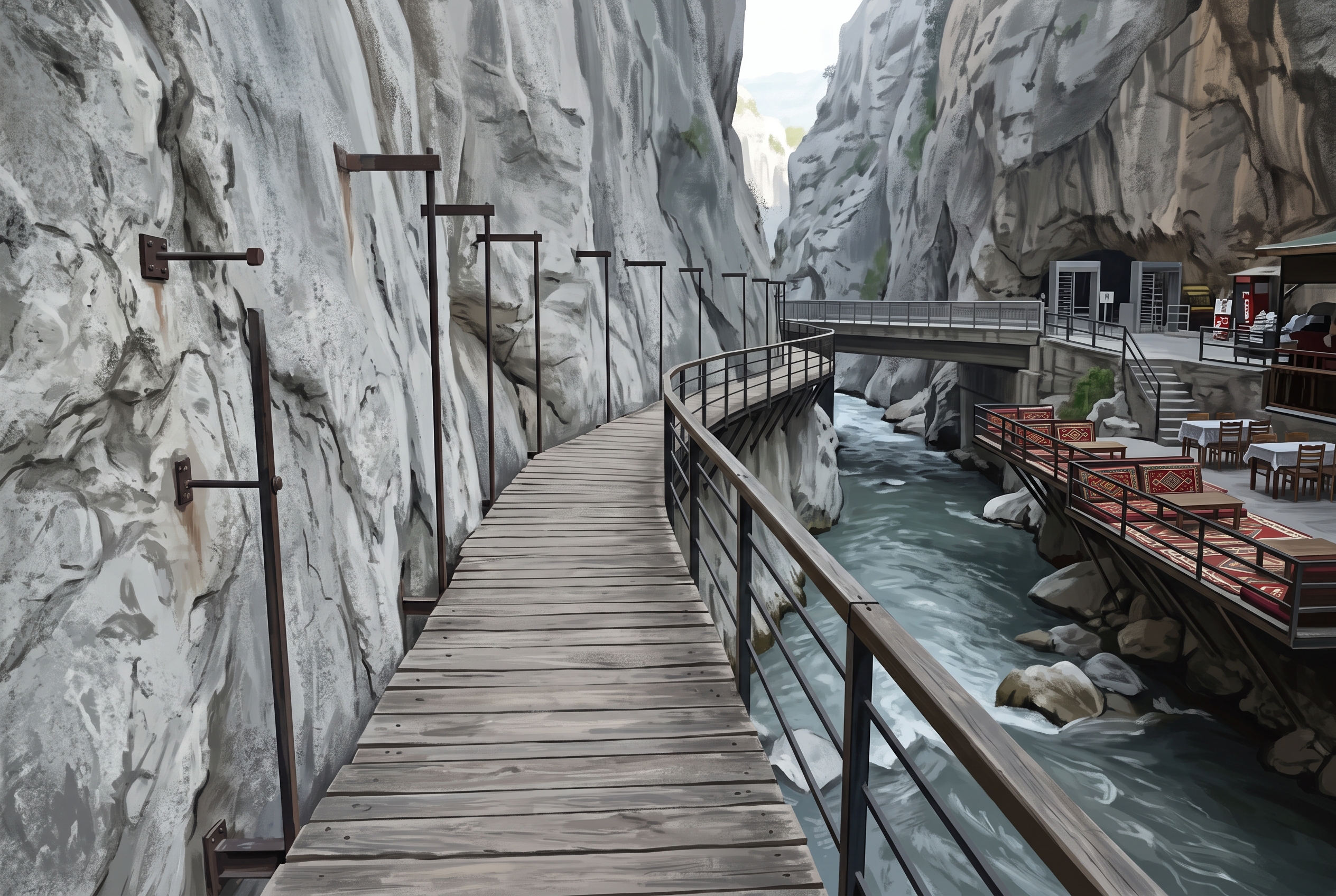
The gorge is a narrow cut in the mountains inland from Fethiye, deep enough that the walls close out most of the sky and the temperature drops noticeably once you're inside. A raised walkway runs along the rock face for the first stretch, which is the part everyone photographs. Then the walkway ends, the river crossing begins, and the character of the day changes.
Past the crossing you're walking on riverbed: loose stones under moving water, some sections shallow and easy, others deep enough to wade properly. There are short scrambles over boulders. None of it is technical, and you don't need ropes, a guide or any climbing experience. What you need is balance, tolerance for cold water, and footwear that stays on your feet.
Most visitors go in some distance, find a spot where the light comes down between the walls, and turn back. Going further is possible and gets harder as the riverbed narrows. There's no single "end" that everyone reaches, so decide as you go rather than committing to a target.
When it isn't safe, and why that matters here
The gorge drains snowmelt from the Taurus range, and that is the one thing about Saklıkent that can turn a day trip into a genuinely bad decision. When the melt is running hard, the water level rises and the current strengthens, and a wading route that's pleasant in one season becomes dangerous in the next. At that point what you have is a fast, cold channel between rock walls with nowhere to climb out, where the walkable riverbed used to be. That is a different problem from the walk being less fun.
The timing shifts from year to year with how much snow fell and how fast it melts, which is why it would be misleading to give you a date range and call it settled. Late summer and early autumn are generally the calmest, lowest-water stretch. Outside that, check locally before you go, and take the answer seriously if it's no.
What to bring
Water shoes or old trainers you don't mind soaking. This is the single decision that determines whether the day works. Flip-flops come off in the current and bare feet on wet stone is how people turn ankles. Grip matters more than keeping dry.
A dry bag or at least a sealed pouch for your phone. You will be in water above the knee at points, and you may sit down in it involuntarily.
Something warm for afterwards. You come out of the gorge colder than you went in, even on a hot day, because the walls keep the sun off the whole route.
Leave behind anything you'd hate to lose in moving water, and don't plan on a bag you have to carry above your head.
Who should skip it
Small children in anything but low water. The current does not need to be dramatic to be too strong for a light body, and carrying a child across a slippery riverbed is a bad idea even when the crossing looks easy from the bank.
Anyone unsteady on wet, uneven rock. The riverbed offers no handrails and no flat stretches, and there's no shortcut back once you're well in.
If either applies, the walkway section at the entrance still gives you the scale of the place, the walls and the light, without the river. That's a legitimate visit. Plenty of people do exactly that and leave satisfied.
Where it fits in a Fethiye trip
Saklıkent sits inland, in the opposite direction from the beach, so it goes better with the other stops along that road than with a lagoon day. Jeep safaris out of Fethiye and Ölüdeniz commonly run this way and bundle it with other stops, which is a reasonable way to do it if you'd rather not drive.
Go in expecting cold water and stones underfoot rather than a scenic stroll, and it's one of the better days out on this coast. Go in wearing sandals, and you'll be the person standing at the crossing, deciding whether to turn around.